From task to review.
- 01
Define
Describe the intended outcome and its constraints.
- 02
Develop
Work with coding tools in a persistent desktop workspace.
- 03
Inspect
Review the proposed change and its verification results.
- 04
Decide
Accept the work or send it back for another pass.
The challenge.
Generating a change is only part of engineering. Someone still needs to understand what changed, assess the evidence, and decide whether the result is ready.
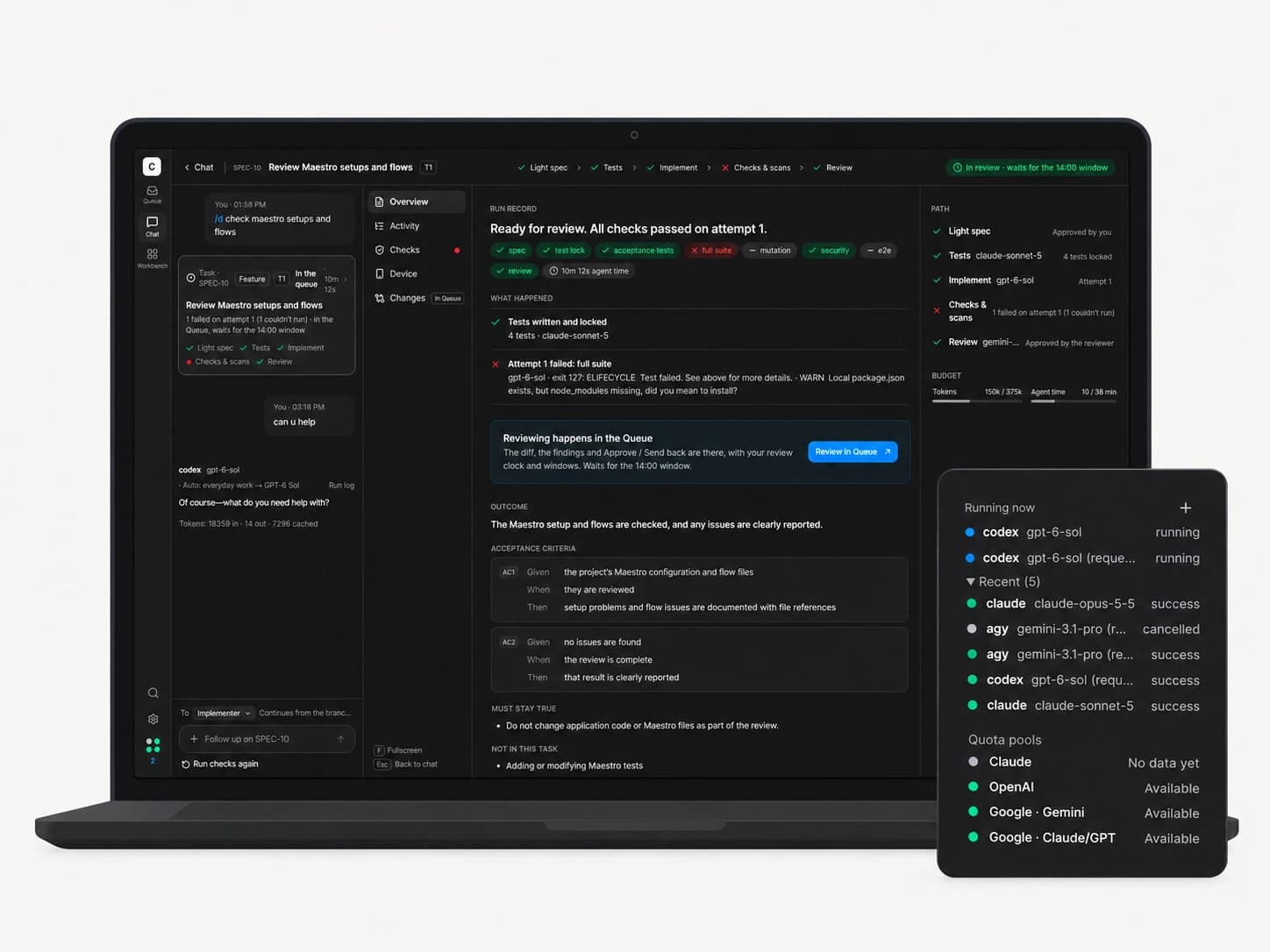
I am building a desktop app that brings that work into one place. The aim is to make AI-generated changes easier to inspect and control while keeping final decisions with the developer.
The boundaries.
- Keep the developer in control of accepting a change.
- Make interrupted work understandable when the developer returns.
- Present verification evidence alongside the proposed result.
How it fits
together.
My work spans the desktop experience, coding-tool integrations, saved conversations, and the path from a task to a reviewable change. The prototype brings work history, verification results, and approval into a shared workspace. It is in active development.
The decisions
behind the details.
Review belongs in the workflow
A completed run still leaves a decision to make. The workspace brings the proposed change and its evidence together for inspection.
TradeoffDeveloper review remains an explicit step in delivery.
Work should survive an interruption
Saved conversations and work history make it possible to return to a task without starting the explanation again.
TradeoffKeeping useful history adds state that the app must manage consistently.
Evidence before confidence
A convincing explanation is not enough to assess a code change. Verification results remain visible alongside the work being reviewed.
TradeoffUncertainty sometimes requires another pass instead of immediate acceptance.